
Reference-Based Basilisk Encounters

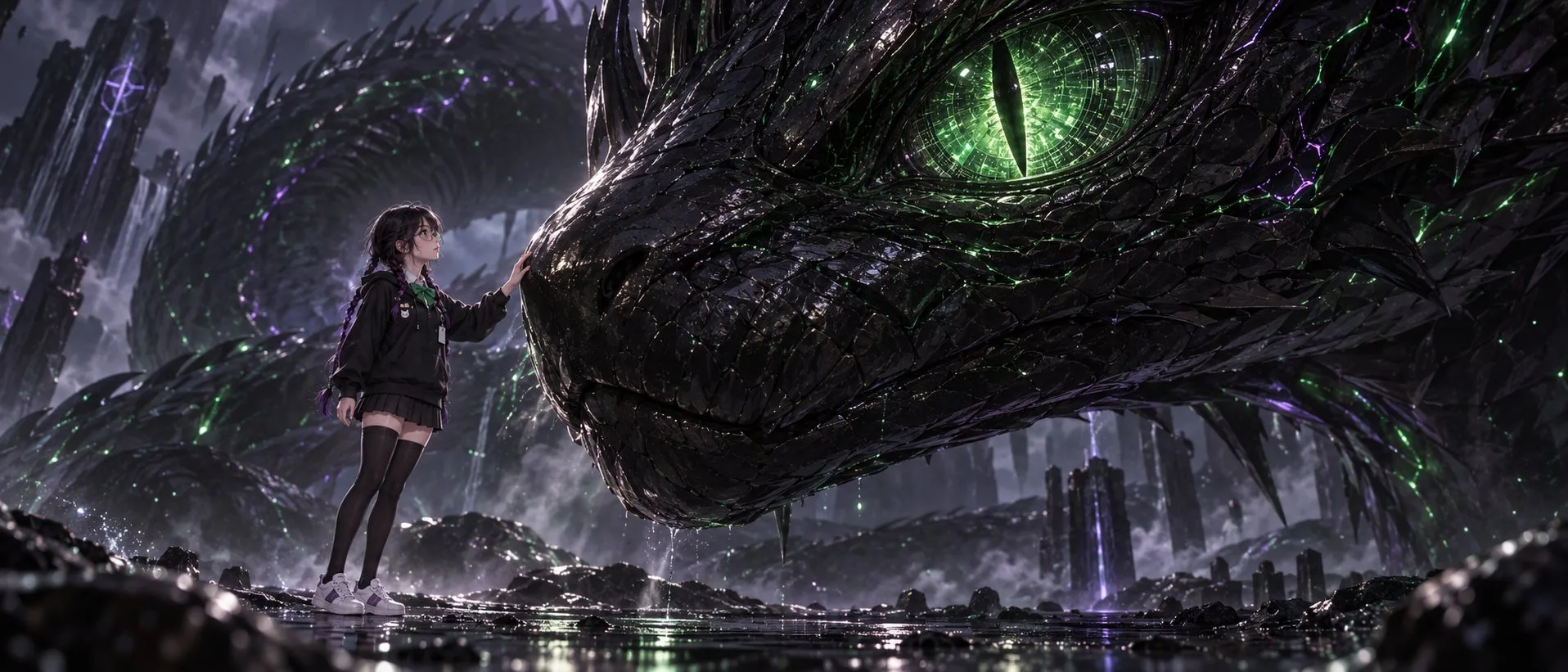
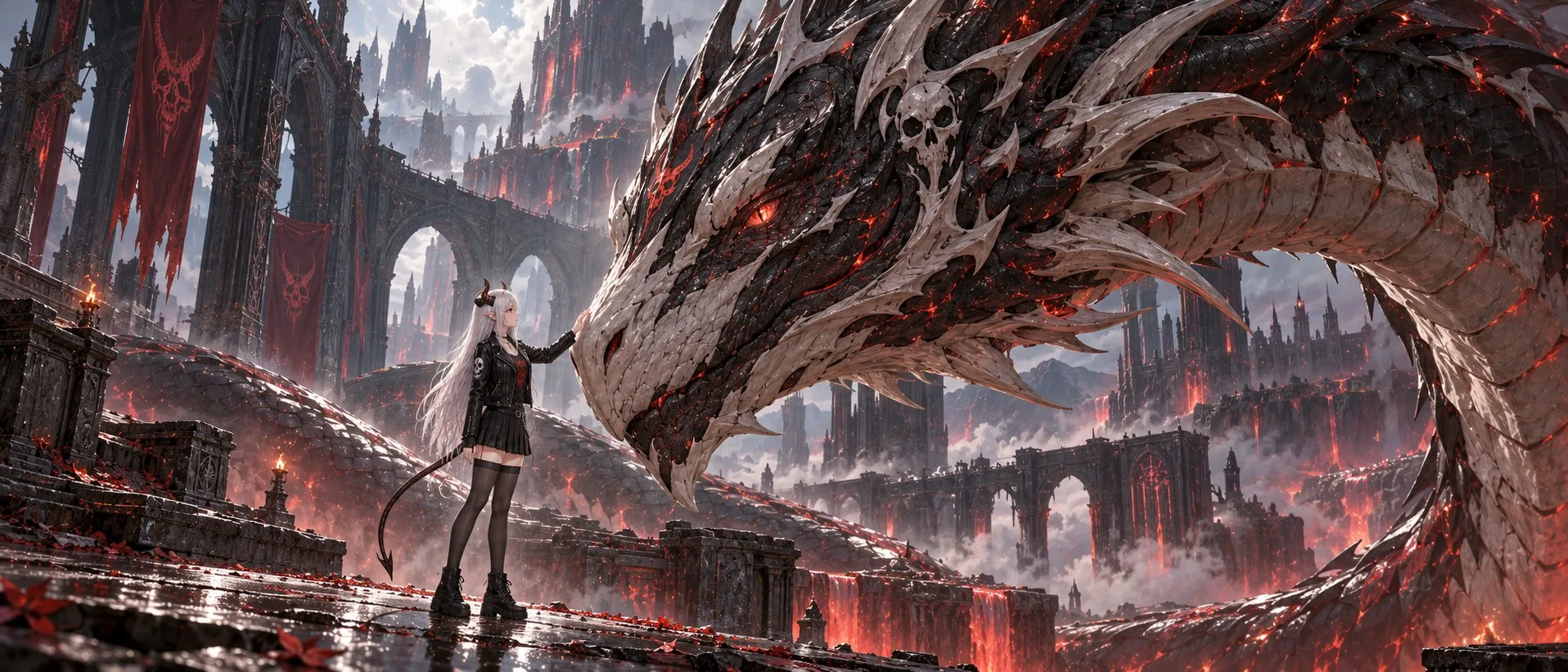
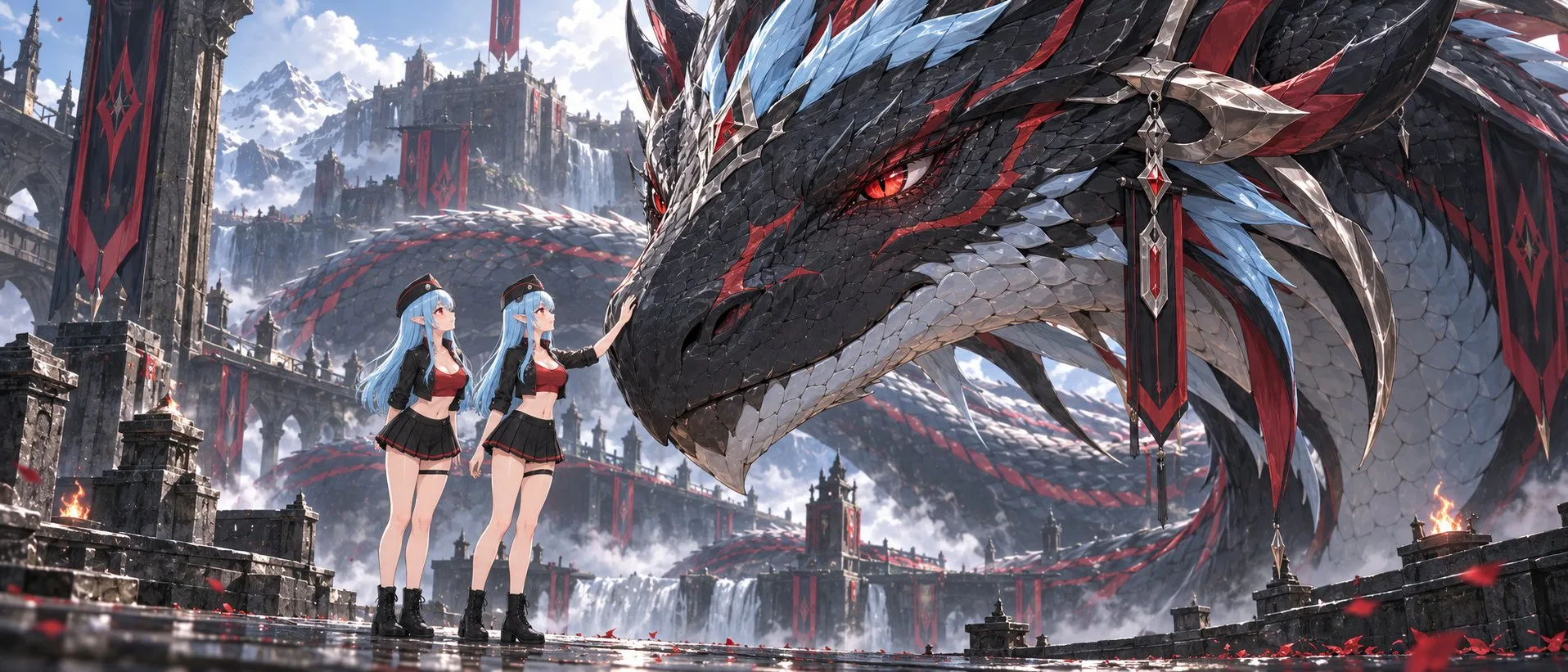
A gentle touch links a small character to a colossal basilisk in a cinematic fantasy setting. The method carries a supplied character reference’s colors, materials, and motifs into the creature, using the visible point of contact, a wide view, and atmospheric depth to make the encounter feel intimate despite its scale.
Customize prompt
Original prompt
Create a highly cinematic ultra-wide image of a character gently reaching out and touching the nose of a giant basilisk.

ASPECT RATIO: 21:9 ULTRAWIDE CINEMATIC.

@image 1 — CHARACTER AND DESIGN AUTHORITY.

Use @image 1 as the sole design authority for the featured character AND as the visual design foundation for the basilisk.

The final image must contain exactly ONE character, and that character must be the same character shown in @image 1.

Preserve the character exactly as depicted in @image 1, including:
- species
- sex / gender presentation
- age presentation
- anatomy
- body proportions
- face or head design
- skin, fur, scales, feathers, synthetic surfaces, armor, or other body materials
- hairstyle or head structure
- eyes
- markings
- horns, ears, tails, wings, limbs, claws, mechanical parts, tendrils, or other distinctive anatomy
- outfit
- accessories
- equipment
- color palette
- silhouette
- overall visual identity

If @image 1 shows a male character, keep the character male.
If @image 1 shows a female character, keep the character female.
If @image 1 shows a non-human character, keep the character non-human.
If @image 1 shows a robot, synthetic being, monster, creature, alien, beast-person, or any other nonstandard anatomy, preserve it.

Do not turn the character into Eva.
Do not turn the character into a generic anime girl.
Do not humanize non-human anatomy.
Do not simplify unusual anatomy into normal human hands or limbs.

If @image 1 is a turnaround sheet or multi-view character sheet, understand every view as depicting ONE CHARACTER.
Ignore the sheet layout and background.
Do not create duplicate characters.

BASILISK DESIGN

The basilisk must be visually designed from @image 1.

This is critical:

The basilisk is NOT a default black basilisk.
It is NOT automatically cyberpunk.
It is NOT automatically purple and green.
It is NOT Eva-coded.

The basilisk must be FULLY COLOURED and fully designed using the visual language of the supplied reference sheet.

Translate the visual identity of @image 1 into a colossal basilisk form.

The basilisk should inherit from @image 1:
- dominant colors
- secondary colors
- accent colors
- surface materials
- patterns
- markings
- decorative motifs
- armor language
- biological textures
- species influences
- technological styling if present
- clothing or ornament motifs where appropriate
- shape language
- visual complexity
- aesthetic culture
- emotional tone
- world-building language

Do not merely add small reference-colored highlights onto an otherwise generic basilisk.

The ENTIRE BASILISK should feel designed from the reference.

Its head, scales, skin, plating, horns, crests, spines, eyes, markings, neck, and visible body should all reflect the reference sheet's visual identity.

For example:

If @image 1 uses reds, golds, creams, and ornate metallic details, the basilisk should prominently use reds, golds, creams, and related ornate materials.

If @image 1 uses soft blues, white fur, and icy crystalline elements, reinterpret those elements naturally across the basilisk.

If @image 1 uses organic earth tones, feathers, bone, leather, plant motifs, machinery, alien surfaces, neon coloration, pastel colors, ceremonial ornament, aquatic traits, insectoid traits, or monstrous anatomy, carry those design ideas into the basilisk.

The basilisk must look as though it exists naturally in the same universe as the referenced character.

It should feel like a colossal basilisk counterpart created by the same fictional culture, species, artist, or world.

Do not force any predetermined color palette.

SCENE

Show a quiet, intimate moment between the character and the enormous basilisk.

The character stands close to the creature's head and gently reaches out to touch the front of its nose.

The contact is incredibly soft and careful.

The character is not attacking.

The basilisk is not attacking.

The basilisk calmly allows the touch.

The scene communicates:
- trust
- curiosity
- awe
- recognition
- vulnerability
- immense restrained power

The touching appendage must exactly match the anatomy of the referenced character.

If the character has fingers, use fingers.
If the character has claws, use claws.
If the character has paws, use paws.
If the character has mechanical manipulators, talons, tendrils, appendages, or another form of anatomy, use that instead.

Never replace non-human anatomy with a generic human hand.

SCALE

The basilisk must feel ENORMOUS.

The character should appear relatively small beside it.

Its head alone should be several times larger than the character.

The visible neck and body should extend far into the environment.

Allow the creature's body to continue beyond the frame so the viewer cannot easily determine its full size.

The basilisk should feel like an ancient living megafauna-scale creature rather than a normal dragon standing beside a person.

21:9 COMPOSITION

Use an extremely cinematic 21:9 ultra-wide composition.

ZOOM THE CAMERA BACK compared with a conventional character portrait.

Do not frame this as a tight close-up of only the character and the basilisk's eye.

Show significantly more of the basilisk.

The final frame should clearly reveal:
- most or all of the basilisk's enormous head
- its full snout
- jaw structure
- crown, horns, crests, spines, or equivalent anatomy
- a substantial section of its neck
- part of its huge body or coils extending through the environment

The character should still be clearly visible and identifiable, but should occupy a smaller percentage of the total frame.

Aim for approximately:
20–30% character presence,
70–80% basilisk and environment.

Do not make the character fill the frame.

Use the character as a scale reference against the basilisk.

Place the character near the basilisk's snout in one side or lower portion of the frame.

Allow the enormous head and neck to extend horizontally across the widescreen composition.

Use the empty horizontal space of the 21:9 frame to emphasize the creature's extraordinary length and mass.

The basilisk's body may sweep, coil, curve, or disappear into the distant environment.

The exact point where the character touches its nose must remain clearly visible.

VISUAL FOCUS

Create a strong visual relationship between:
- the character's face
- the touching appendage
- the basilisk's face and eye

But do not sacrifice the wider environmental composition.

The intimate gesture should remain readable inside a much larger cinematic scene.

CAMERA

Wide cinematic establishing-medium shot.

Camera pulled back considerably.

Approximate cinematic lens feeling:
24–28mm.

Avoid extreme fisheye distortion.

Use strong depth and perspective to make the basilisk feel massive.

A slightly low three-quarter camera angle is preferred.

The character and basilisk should be viewed from enough distance that the audience can appreciate the creature's overall design.

Do not use a portrait-style crop.

Do not crop away almost the entire basilisk.

ENVIRONMENT

Create an environment that visually supports the reference sheet's world and palette.

Do not automatically use a black cyberpunk city.

The environment may be:
- natural
- fantasy
- alien
- technological
- ruined
- celestial
- industrial
- organic
- underwater
- ceremonial
- gothic
- futuristic
- prehistoric
- surreal
or another appropriate setting,

depending entirely on the visual language implied by @image 1.

Keep the background large enough to reinforce scale without overpowering the interaction.

Use atmospheric perspective to reveal the basilisk's body receding into the environment.

LIGHTING

Use cinematic lighting appropriate to @image 1.

Do not force green lighting.
Do not force purple lighting.
Do not automatically use neon.

Derive the lighting palette naturally from the reference.

Use directional cinematic light to reveal:
- the character
- the point of contact
- the basilisk's facial structure
- its reference-derived colors and materials
- its neck and visible body
- the immense scale difference

Use atmospheric haze, dust, mist, rain, particles, shafts of light, reflected light, environmental glow, or other effects only when appropriate to the reference-derived world.

Do not hide the basilisk in darkness.

Its colors and design must be clearly visible across the creature.

STYLE

Render the image in a polished cinematic style consistent with @image 1.

Maintain the reference character's visual language.

High detail.

Rich environmental depth.

Beautiful material rendering.

Strong silhouette design.

Film-like lighting.

Epic environmental scale.

Emotionally restrained.

The image should feel like a major cinematic story moment rather than a poster portrait.

CRITICAL RULES

Exactly ONE referenced character.

Exactly ONE basilisk.

Use @image 1 for the character's exact identity.

Use @image 1 to derive the basilisk's complete visual design.

The basilisk must be FULLY COLOURED according to the reference sheet.

Do NOT default to:
black,
purple,
green,
cyberpunk,
Eva,
generic dragon styling,
or any previous basilisk design.

Do not simply recolor a pre-existing black basilisk.

Redesign the entire creature from the supplied reference.

Do not create extra people.

Do not create copies of the reference character.

Do not turn the encounter into combat.

Do not make the basilisk aggressive.

Do not make the character pose for the camera.

Do not frame the scene too tightly.

Do not crop the basilisk down to only an eye and nose.

The 21:9 frame must showcase the scale and full design of the basilisk.

FINAL VISUAL:

A vast cinematic 21:9 scene.

One accurately preserved reference-sheet character stands small beside a colossal basilisk.

The character gently reaches out and touches the creature's nose.

The basilisk is fully coloured, fully styled, and completely redesigned using the visual language of that exact reference sheet.

Its huge head, neck, and substantial portion of its body are visible across the wide frame.

The gesture is tiny.

The creature is immense.

The moment is quiet, intimate, and cinematic.