
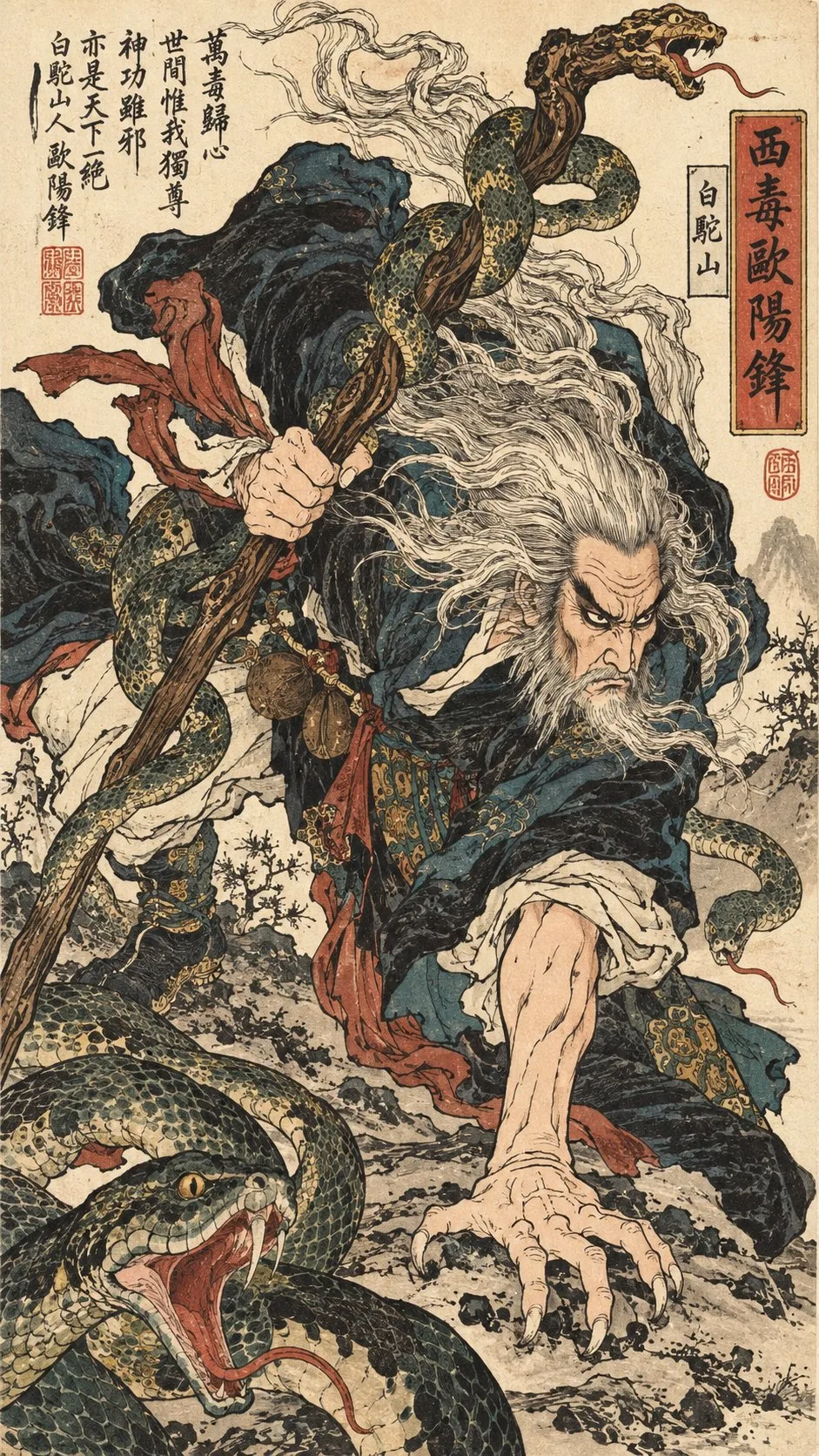
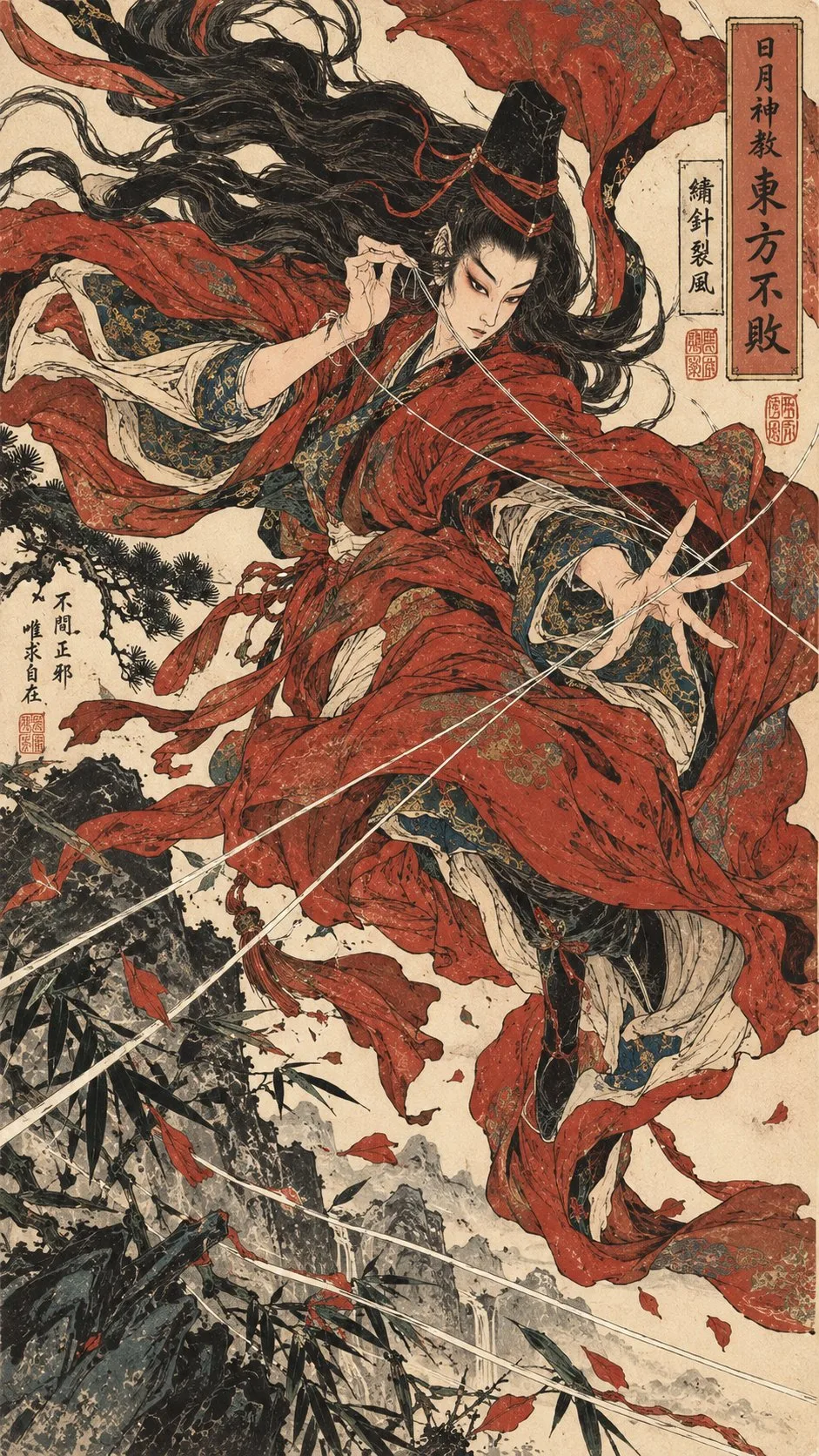
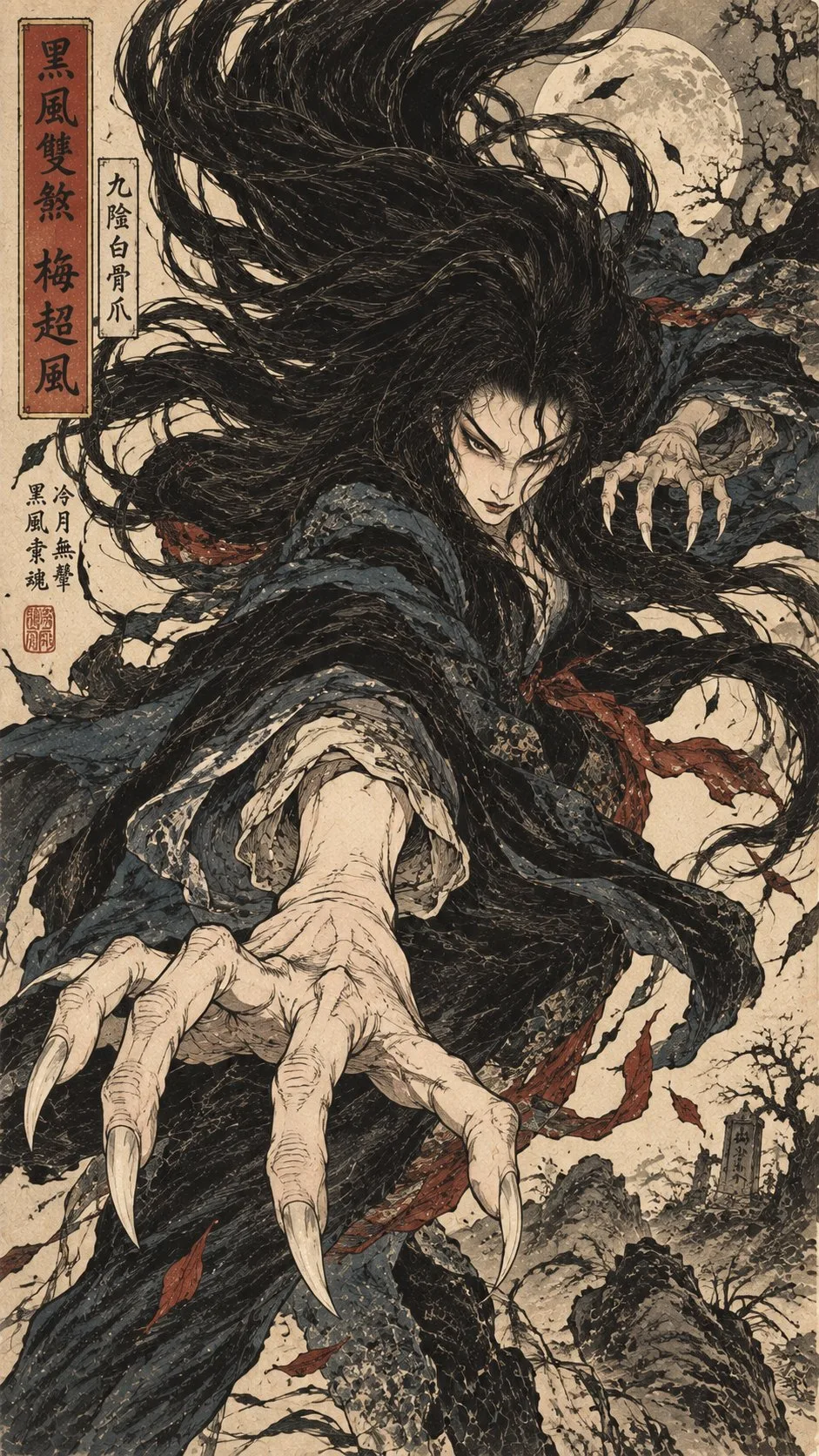
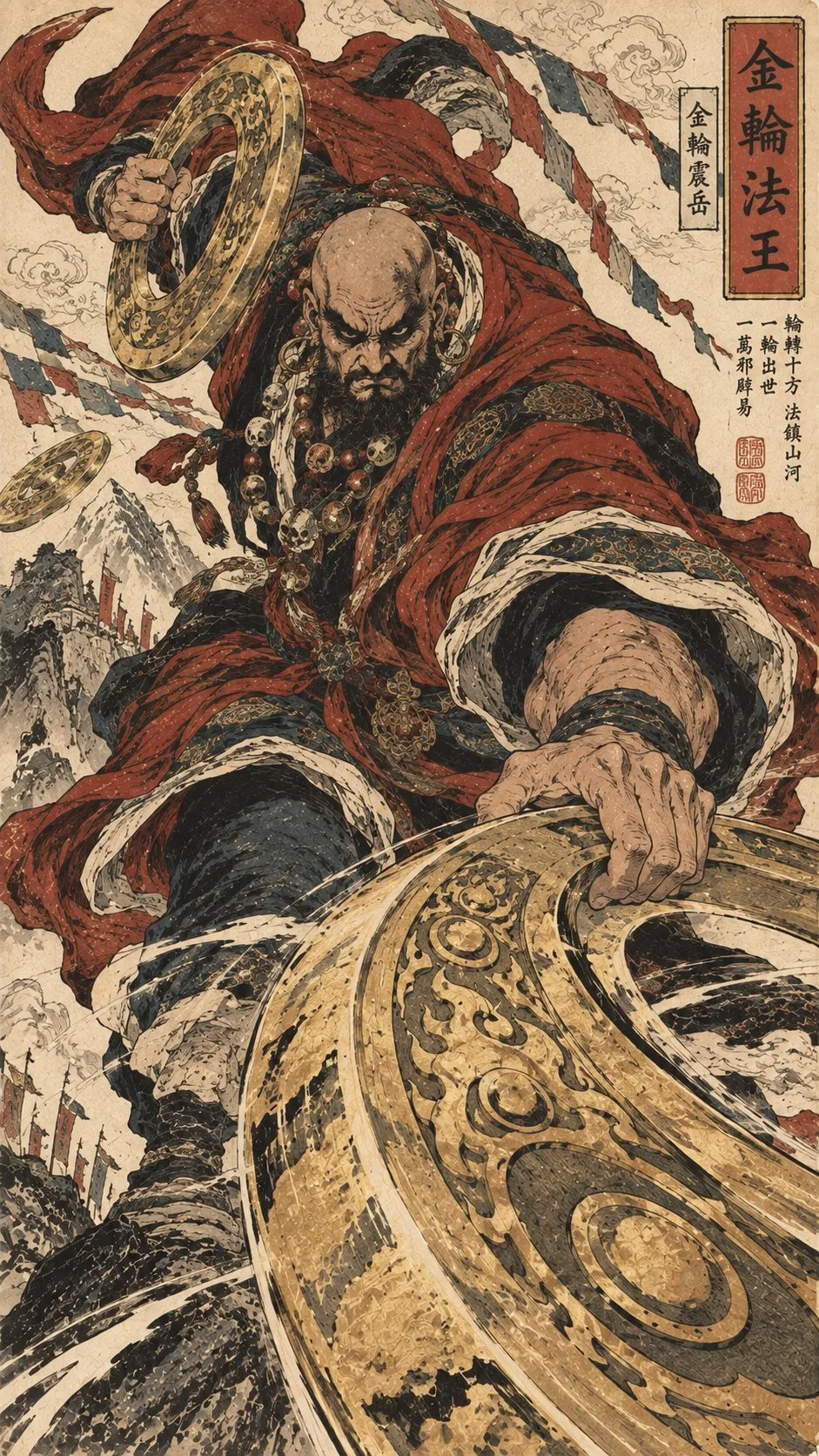
Wuxia Ukiyo-e Character Illustrations

Exaggerated perspective and sweeping robes, hair and weapons turn martial arts poses into bold woodblock compositions. Replace the character, action, visual motif and palette while preserving carved outlines, flat color blocks and quiet paper backgrounds.
Customize prompt
Original prompt
Simplified Chinese
【人物】填写武侠人物名称
【核心动作】填写代表性武功、姿态或战斗动作
【视觉锚点】填写武器、长发、法轮、蛇、丝线等标志元素
【主色调】填写 2–4 个主色
【题签文字】填写人物名或四字短题

创作一幅 9:16 竖幅东方武侠浮世绘人物画。基于【人物】重新塑造角色形象,不参考任何影视演员脸或具体影视造型。

人物正在施展【核心动作】,采用夸张透视、强扭转、大幅动态裁切,让身体、衣袍、头发和【视觉锚点】共同形成清晰的大形与强烈动势。人物占画面约 75%–85%,局部可自然出框,缩略图下仍能一眼识别角色与动作。

整体采用传统武者绘与木版套色视觉语言:粗细明确的黑色雕版轮廓、平面大色块、夸张人体比例、古版画式空间压缩。使用【主色调】作为主体色系,颜色饱满、稳定、完整,避免现代渐变、CG 高光和游戏原画质感。

构图至少包含一个强视觉锚点,以及一条清晰硬轴或大曲线,例如兵器、手臂、发束、衣袍、丝线、法轮或蛇身。所有元素必须有明确方向和连接关系,不随机堆叠。

背景保持低密度,以暖象牙米白纸面为主,只加入少量山石、枯木、远山、云气或环境暗示,大面积留白,让人物成为绝对主体。

画面边缘加入传统纵向题签、小题识和 1–2 枚朱印,【题签文字】自然融入古画边栏,不使用现代大标题、编号或 UI 装饰。

整体气质应具有武侠、怪诞、强动作和古版画张力,同时保持人物辨识度。每个角色根据自身武功、武器、发型、服饰和动作形成不同视觉母题,但整组必须保持相同的纸张、线条、套色、题签和版画质感。

避免:影视演员脸、现代古装写真、仙侠手游立绘、动漫脸、3D 渲染、摄影质感、标准站姿、现代金属高光、霓虹特效、魔法光效、复杂背景、严重做旧黄斑、随机噪点、现代 Typography、水印、编号。
English
[Character] Enter the name of a wuxia character
[Core Action] Enter a representative martial art, pose, or combat action
[Visual Anchor] Enter distinctive elements such as weapons, long hair, Dharma wheels, snakes, or silk threads
[Main Color Palette] Enter 2–4 main colors
[Inscription Text] Enter the character's name or a short four-character title

Create a 9:16 vertical Eastern wuxia ukiyo-e character painting. Reimagine the character based on [Character], without referring to any film or television actor's face or any specific film or television character design.

The character is performing [Core Action]. Use exaggerated perspective, strong twisting, and extensive dynamic cropping so that the body, robes, hair, and [Visual Anchor] together form clear large shapes and a strong sense of movement. The character occupies approximately 75%–85% of the frame; parts may naturally extend beyond the frame, and the character and action should still be recognizable at a glance in a thumbnail.

Use the visual language of traditional musha-e and multicolor woodblock printing: black carved outlines with clearly differentiated thick and thin lines, large flat color blocks, exaggerated human proportions, and the compressed space of old prints. Use [Main Color Palette] as the main color scheme, with rich, stable, complete colors. Avoid modern gradients, CG highlights, and game concept-art textures.

The composition must contain at least one strong visual anchor and one clear rigid axis or large curve, such as a weapon, arm, bundle of hair, robe, silk thread, Dharma wheel, or snake's body. All elements must have clear directions and connections; do not stack them randomly.

Keep the background at a low density, mainly warm ivory off-white paper, adding only a small amount of rocks, dead trees, distant mountains, clouds and mist, or hints of the environment. Leave large areas of negative space so that the character becomes the absolute focal subject.

Add traditional vertical title slips, small inscriptions, and 1–2 vermilion seals along the edges of the image. [Inscription Text] should blend naturally into the margins of the old painting. Do not use modern large titles, numbering, or UI decorations.

The overall character of the image should convey wuxia, the grotesque, forceful action, and the tension of old prints, while keeping the character recognizable. Each character should form a different visual motif based on their own martial arts, weapons, hairstyle, clothing, and actions, but the entire series must retain the same paper, lines, multicolor printing, title slips, and print texture.

Avoid: film or television actors' faces, modern period-costume photography, xianxia mobile-game character art, anime faces, 3D rendering, photographic texture, standard standing poses, modern metallic highlights, neon effects, magical light effects, complex backgrounds, heavy artificial aging and yellow stains, random noise, modern Typography, watermarks, numbering.