
Customize: Wuxia Ukiyo-e Character Illustrations
Prompt by @MrLarus. The image shows the original example.
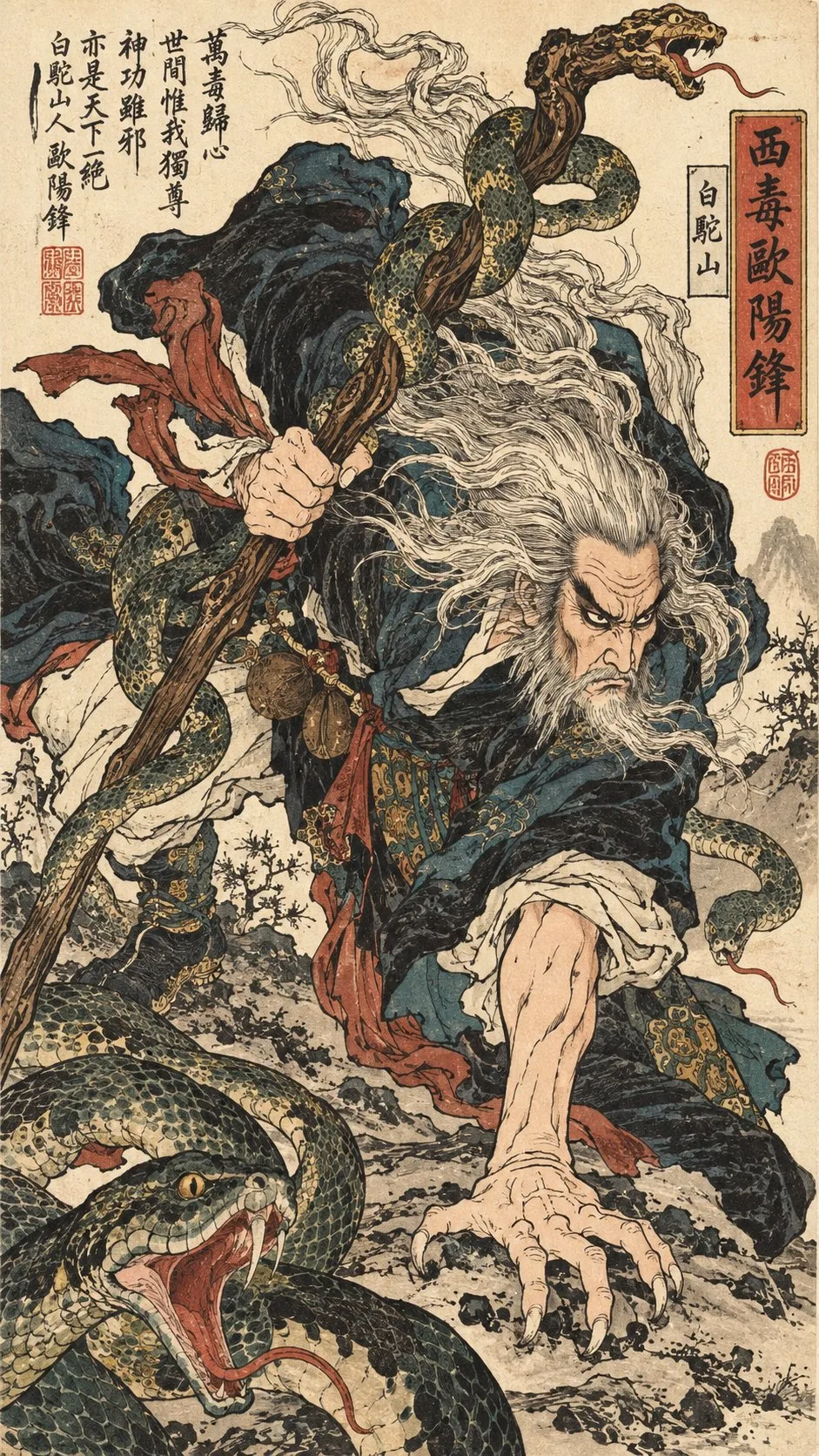
Make it yours
Change the text fields below, or leave them blank to keep the original. They fill the highlighted parts of the prompt.
Reference images
Copy the prompt and attach your own reference images in your generation tool. Follow the requirements below and match any image labels to the prompt. No image upload is needed on UNIP.
Author’s instructions · English
[Character] Enter the name of a wuxia character
[Core Action] Enter a representative martial art, pose, or combat action
[Visual Anchor] Enter distinctive elements such as weapons, long hair, Dharma wheels, snakes, or silk threads
[Main Color Palette] Enter 2–4 main colors
[Inscription Text] Enter the character's name or a short four-character title
Create a 9:16 vertical Eastern wuxia ukiyo-e character painting. Reimagine the character based on [Character], without referring to any film or television actor's face or any specific film or television character design.
The character is performing [Core Action]. Use exaggerated perspective, strong twisting, and extensive dynamic cropping so that the body, robes, hair, and [Visual Anchor] together form clear large shapes and a strong sense of movement. The character occupies approximately 75%–85% of the frame; parts may naturally extend beyond the frame, and the character and action should still be recognizable at a glance in a thumbnail.
Use the visual language of traditional musha-e and multicolor woodblock printing: black carved outlines with clearly differentiated thick and thin lines, large flat color blocks, exaggerated human proportions, and the compressed space of old prints. Use [Main Color Palette] as the main color scheme, with rich, stable, complete colors. Avoid modern gradients, CG highlights, and game concept-art textures.
The composition must contain at least one strong visual anchor and one clear rigid axis or large curve, such as a weapon, arm, bundle of hair, robe, silk thread, Dharma wheel, or snake's body. All elements must have clear directions and connections; do not stack them randomly.
Keep the background at a low density, mainly warm ivory off-white paper, adding only a small amount of rocks, dead trees, distant mountains, clouds and mist, or hints of the environment. Leave large areas of negative space so that the character becomes the absolute focal subject.
Add traditional vertical title slips, small inscriptions, and 1–2 vermilion seals along the edges of the image. [Inscription Text] should blend naturally into the margins of the old painting. Do not use modern large titles, numbering, or UI decorations.
The overall character of the image should convey wuxia, the grotesque, forceful action, and the tension of old prints, while keeping the character recognizable. Each character should form a different visual motif based on their own martial arts, weapons, hairstyle, clothing, and actions, but the entire series must retain the same paper, lines, multicolor printing, title slips, and print texture.
Avoid: film or television actors' faces, modern period-costume photography, xianxia mobile-game character art, anime faces, 3D rendering, photographic texture, standard standing poses, modern metallic highlights, neon effects, magical light effects, complex backgrounds, heavy artificial aging and yellow stains, random noise, modern Typography, watermarks, numbering.
Only the highlighted parts change. Your edits stay on this page.